One day a man in his forties walked into my studio at Inkology Tattoo in West Hollywood. He brought a photo of his mother who had passed away and wanted a full chest portrait placed right over his heart. Black and grey. One full day session.
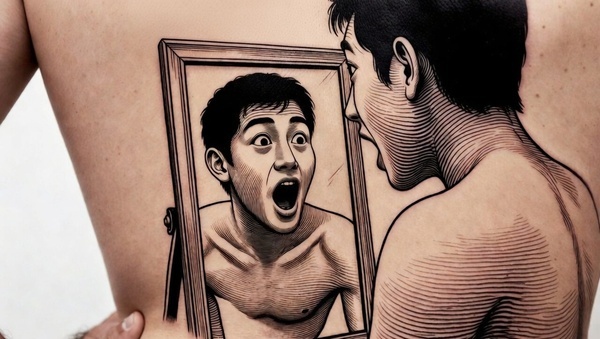
When I finished the piece and handed him a mirror, he looked at his chest and cried. In a good way. These are the moments I live for in this profession, moments that no paycheck can replace. They touch you deep.
Working on such pieces carries special responsibility. There is no room for error. You are trusted with something sacred, with the bright memory of the closest person in someone's life. That weight is real.
What is realism?
Realism, or photorealism, is a tattoo style that tries to reproduce an image with photographic accuracy. Every proportion, every shadow, every tonal transition must be exact. The goal is to make the viewer believe they are looking at a photograph printed on skin, not a drawing.
This is not about interpretation or stylization. Realism demands technical precision. Correct anatomy, light source logic, smooth gradients, crisp detail. If the nose is a millimeter too wide or the eye sits a degree too low, the whole piece fails.
There are two main branches.
Black and grey realism uses only black ink diluted to various shades of grey. This approach is ideal for portraits, animals, architecture, and any subject where color is not critical. Black and grey ages better. A well executed piece holds clarity for ten to fifteen years and beyond. The contrast stays strong, the details remain readable, especially if the client takes care of it.
Color realism adds the full spectrum. Flowers, landscapes, vibrant portraits, anything that benefits from hue. Color realism creates striking results but it is more complex. Pigments behave differently on skin. Some fade faster than others, especially under Los Angeles sun. Yellows, flesh tones, browns, oranges go first. Without diligent sunscreen use, color work fades noticeably faster than grey work. Still, many clients choose color for the emotional impact. Worth it if you commit to protection.
Placement
Where you put a realistic tattoo matters as much as what you put.
Best spots:
- Chest – especially over the heart for memorial portraits. Flat surface, low mobility, emotionally meaningful. Pain level is medium to high depending on proximity to the sternum.
- Shoulder and upper arm – among the least painful zones, plenty of flat real estate, ideal for medium to large portraits.
- Forearm (outer side) – visible, relatively comfortable, good for vertical compositions.
- Thigh – large, flat, low pain, excellent for big pieces. Popular with clients who want private work.
- Back (upper and full back) – maximum canvas for epic compositions. Upper back is less painful; lower back and spine are tougher.
Zones to avoid for detailed portraits:
- Knees, elbows – constant bending distorts the image.
- Inner wrist – too small for fine detail, high pain, prone to fading from friction.
- Ribs, sternum – extremely painful, skin stretches and contracts with breathing. Possible but challenging.
Skin changes with age and weight fluctuation, so think long term. A chest portrait will hold better than an inner bicep piece if you plan to gain or lose significant muscle mass.
Size guidelines
Realism needs space. You cannot cram photographic detail into a two inch circle.
- Minimum for recognizable portrait: 10 by 15 cm (roughly 4 by 6 inches). Anything smaller loses facial features.
- Medium portraits: 15 to 30 cm. Comfortable range for single session full day work.
- Large pieces: 30 cm and up. Sleeves, full backs, thigh panels. Require multiple full day sessions.
Go bigger if budget and placement allow. More space equals more detail, better aging, clearer storytelling.
How long does it take?
Time depends on size, complexity, and level of detail.
- Small pieces (10 to 15 cm): 2 to 4 hours. Doable in a half day.
- Medium portraits (15 to 30 cm): 4 to 8 hours. One full day session, which is what I recommend. Full day sessions let me work without rushing, maintain consistency in shading, and give the client a finished piece in one go.
- Large compositions (sleeves, back pieces): 3 to 5 full day sessions or more, spaced at least a month apart for healing.
Realism is slow. Every tiny gradient, every pore, every strand of hair takes time. Rushing results in flat, lifeless work. If an artist tells you they can knock out a detailed portrait in two hours, walk away.
Pain
Pain varies by body location and personal tolerance.
Least painful areas: shoulder, upper back, outer thigh, outer forearm. Most clients handle these zones comfortably for six to eight hour sessions.
Medium pain: inner forearm, calf, upper chest (away from sternum).
Most painful: ribs, sternum, inner bicep, elbow, knee, wrist, foot, spine. Ribs and sternum are brutal. I warn every client before starting. Some people tap out after an hour, others push through.
Pain also escalates with session length. The first hour is tolerable. By hour four or five, even easy spots start to burn. That is normal. Take breaks, breathe, stay hydrated, eat something. Do not show up hungover or on an empty stomach. Both amplify pain significantly.
Consultation process
Every serious realistic tattoo starts with a consultation. This is where we discuss your vision, review references, choose placement, estimate time and cost, and confirm expectations.
I do consultations in person at Inkology Tattoo (303 S Crescent Heights Blvd, West Hollywood) or via video call for clients coming from Beverly Hills, Santa Monica, or farther out. Consultations are free if you plan to proceed with the project.
What we cover:
- Reference photos – bring the highest resolution images you have. For portraits, clear lighting and sharp focus are essential. Blurry phone screenshots will not work.
- Placement and size – we discuss anatomy, how the design will flow with your body, and whether your chosen spot has enough space.
- Style (black and grey vs color) – I explain aging, maintenance, UV exposure, and help you decide.
- Session structure – how many full day sessions are needed, scheduling, deposits.
- Pricing – upfront, no surprises.
I usually provide a sketch or digital mockup one to two days before the first session. This gives you time to request adjustments. Once we start, changes are harder.
Pricing in Los Angeles
Realistic tattoos are priced by time, not by design complexity or size alone. Los Angeles rates vary widely depending on the artist's experience, location, and demand.
General market rates:
- Hourly: $200 to $400 per hour.
- Full day session (6 to 8 hours): $1,600 to $3,200. My rate is $1,700 per full day.
Project estimates:
- Medium portrait (chest, shoulder): $1,500 to $3,000 (one to two sessions).
- Full sleeve: $3,000 to $8,000 (three to five sessions).
- Full back: $8,000 to $15,000 and up (five to eight sessions or more).
Higher prices usually reflect higher skill, better equipment, cleaner studios, and longer wait times. Lower prices can mean less experience, rushed work, or compromised hygiene. Not always, but often. Do your research.
Choosing the right studio
Realism requires not just skill but also proper environment and tools.
What to look for:
- Cleanliness – floors, workstations, equipment should be spotless. Fresh gloves, new needles, sterile setup every time.
- Licensing – California requires tattoo artists to hold a valid license and work in inspected facilities. Ask to see it.
- Consent and process – reputable studios have you fill out health forms, explain aftercare, and answer questions.
- Atmosphere – you will spend six to eight hours here. The vibe matters. Comfortable seating, good lighting, respectful staff.
Inkology Tattoo in West Hollywood meets all of these. We are located at 303 S Crescent Heights Blvd, easy access from Beverly Hills, Santa Monica, and downtown LA.
Aftercare for realistic tattoos
Proper aftercare is critical. A $3,000 portrait can fade or blur if you neglect healing.
Immediately after the session: I clean the fresh tattoo, pat it dry, and apply a transparent medical film (second skin, such as Saniderm or Tegaderm). This film protects against dirt and friction and speeds healing. Fluid (lymph, blood, excess ink) will collect under it. That is normal.
How long to keep the film: Generally 24 to 48 hours. Remove it after about a day or two. If it starts peeling earlier (say, 12 hours), take it off immediately. Do not reapply.
Sleeping: Avoid direct pressure on the tattoo the first night. If the film stays on well, you can sleep, but keep bedding clean and try not to lie on the fresh work.
Removing the film: Do it under warm (not hot) water, pulling slowly parallel to the skin. If adhesion is strong, stay in the shower a bit longer. After removal, wash with warm water and mild, fragrance free soap (child safe soap, Cetaphil, or similar), pat dry with a clean towel, and apply a thin layer of healing ointment.
Healing ointment: Use Aquaphor (panthenol rich) for the first 3 to 4 days, 2 to 3 times daily. Apply a very thin layer. Too much ointment suffocates the skin and can pull out pigment. Do not use straight petroleum jelly (Vaseline). It blocks breathability and can cause uneven pigment loss.
Transition to lotion: Around day 3 or 4, switch to a fragrance free, alcohol free moisturizer (Lubriderm, Cetaphil, Aveeno). Apply thinly 2 to 3 times daily. Adjust frequency based on skin dryness. If your skin feels tight, add an extra application.
Itch management: Do not scratch. Ever. Itching usually peaks around days 4 to 7 and then subsides. Lightly pat the area, use a cold compress, or apply an extra thin layer of lotion. Scratching pulls out ink and creates scar tissue.
Healing timeline: Surface healing takes 2 to 3 weeks. Full dermal healing takes up to 2 months. Schedule at least a 4 to 6 week gap (ideally 6 to 8 weeks) between large sessions to allow complete recovery.
What to avoid (first 2 to 3 weeks):
- Prolonged soaking – no baths, pools, ocean, hot tubs. Showers are fine; keep them short.
- Sun exposure – cover the tattoo or stay out of direct sun entirely. UV destroys pigment, especially in color work.
- Heavy sweating – avoid intense workouts that involve the tattooed area.
- Tight clothing – friction causes irritation and pulls ink.
- Picking scabs – let them fall off naturally.
Long term care: After healing, use sunscreen (SPF 30 or higher) every time the tattoo sees daylight. This is non negotiable if you want your realism work to last. Los Angeles sun is relentless. Unprotected tattoos fade within a few years, sometimes faster.
Sport after tattoo: Light activity is fine after a few days, but avoid intense workouts that strain the tattooed zone for at least 1 to 2 weeks. Swimming and contact sports wait until full surface healing (3 weeks minimum).
Cover ups with realism
Realism can hide old tattoos, but success depends on the size, density, and placement of the original work.
What works:
- Light, faded tattoos – easy to cover with darker realism shading.
- Small to medium old pieces – can be incorporated into a larger realistic composition (for example, turning an old tribal band into part of a sleeve background).
- Strategic design – using dark areas of the new piece (shadows, hair, background) to mask the old ink.
What is challenging:
- Dense black work – solid black areas are nearly impossible to cover without laser pre treatment.
- Large old tattoos in prime placement – limits design options.
If you are considering a cover up, bring photos of the existing tattoo to the consultation. I will assess whether realism can work or if laser lightening is needed first.
Final thoughts
Realistic tattoos are high skill, high investment projects. They demand quality references, careful placement, experienced artists, and diligent aftercare. For clients in Los Angeles who want premium, emotionally powerful art, a full day $1,700 session with a seasoned realism specialist delivers lasting results.
Memorial portraits, beloved pets, family members, personal heroes—all of these translate beautifully into photorealism when done right. The process is long, sometimes painful, and definitely not cheap. But when you see the finished piece in the mirror and it takes your breath away, every hour and dollar is worth it.
If you are ready to start your realism project, visit Inkology Tattoo Art Gallery at 303 S Crescent Heights Blvd in West Hollywood. Call or message us at +1 323 351 9888 to book your consultation.
Check out my portfolio of realistic tattoos