
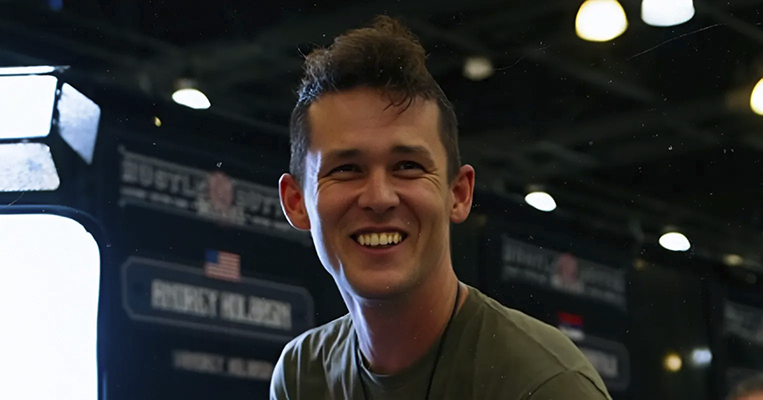
Part Four of the Interview
Should you make an appointment with a tattoo artist for a festival?
[Journalist] How does working at tattoo festivals differ from a calm session in the studio?
[Rinat] For me, they are two different processes. In the studio, you sit calmly, you're not in a hurry, you work in a familiar atmosphere.
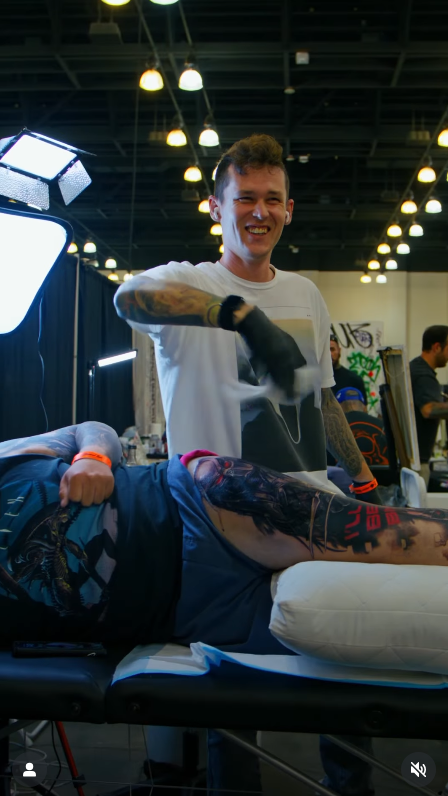
At a tattoo convention, it's a constant race. As a rule, participation implies competition for a prize. When you're competing among 400-700 artists and want to win a place, you have to give it your all and switch into “turbo mode.”
When I work at a convention, I hardly pay attention to people's emotions: I understand that they are in pain, but I work faster, at a reasonable speed, without compromising quality. The atmosphere for the client is also different: people are walking around, asking questions, there is noise and movement.
[Rinat] For me, they are two different processes. In the studio, you sit calmly, you're not in a hurry, you work in a familiar atmosphere.
At a tattoo convention, it's a constant race. As a rule, participation implies competition for a prize. When you're competing among 400-700 artists and want to win a place, you have to give it your all and switch into “turbo mode.”
When I work at a convention, I hardly pay attention to people's emotions: I understand that they are in pain, but I work faster, at a reasonable speed, without compromising quality. The atmosphere for the client is also different: people are walking around, asking questions, there is noise and movement.
Safety and sterility at festivals
[Journalist] How different is this environment from a safe, sterile studio? There are a lot of people around, how safe is it for the session and the client?
[Rinat] The artist follows hygiene and sterility rules in any case. Everything is completely under control in the studio: it's clean, comfortable, cozy, and everything is checked.
At conventions, the atmosphere is different: they are usually held in exhibition centers and similar venues. There are strange combinations: for example, a tattoo festival alongside a cat or dog show; fur and fresh wounds don't mix well at all.
Or joint festivals with barbers: haircuts in one area, tattoos in another. If safety and comfort are the client's top priorities, I would recommend a studio. If you want excitement and the chance to win prizes, then go for a convention.
[Rinat] The artist follows hygiene and sterility rules in any case. Everything is completely under control in the studio: it's clean, comfortable, cozy, and everything is checked.
At conventions, the atmosphere is different: they are usually held in exhibition centers and similar venues. There are strange combinations: for example, a tattoo festival alongside a cat or dog show; fur and fresh wounds don't mix well at all.
Or joint festivals with barbers: haircuts in one area, tattoos in another. If safety and comfort are the client's top priorities, I would recommend a studio. If you want excitement and the chance to win prizes, then go for a convention.
Back in three days and collaborations
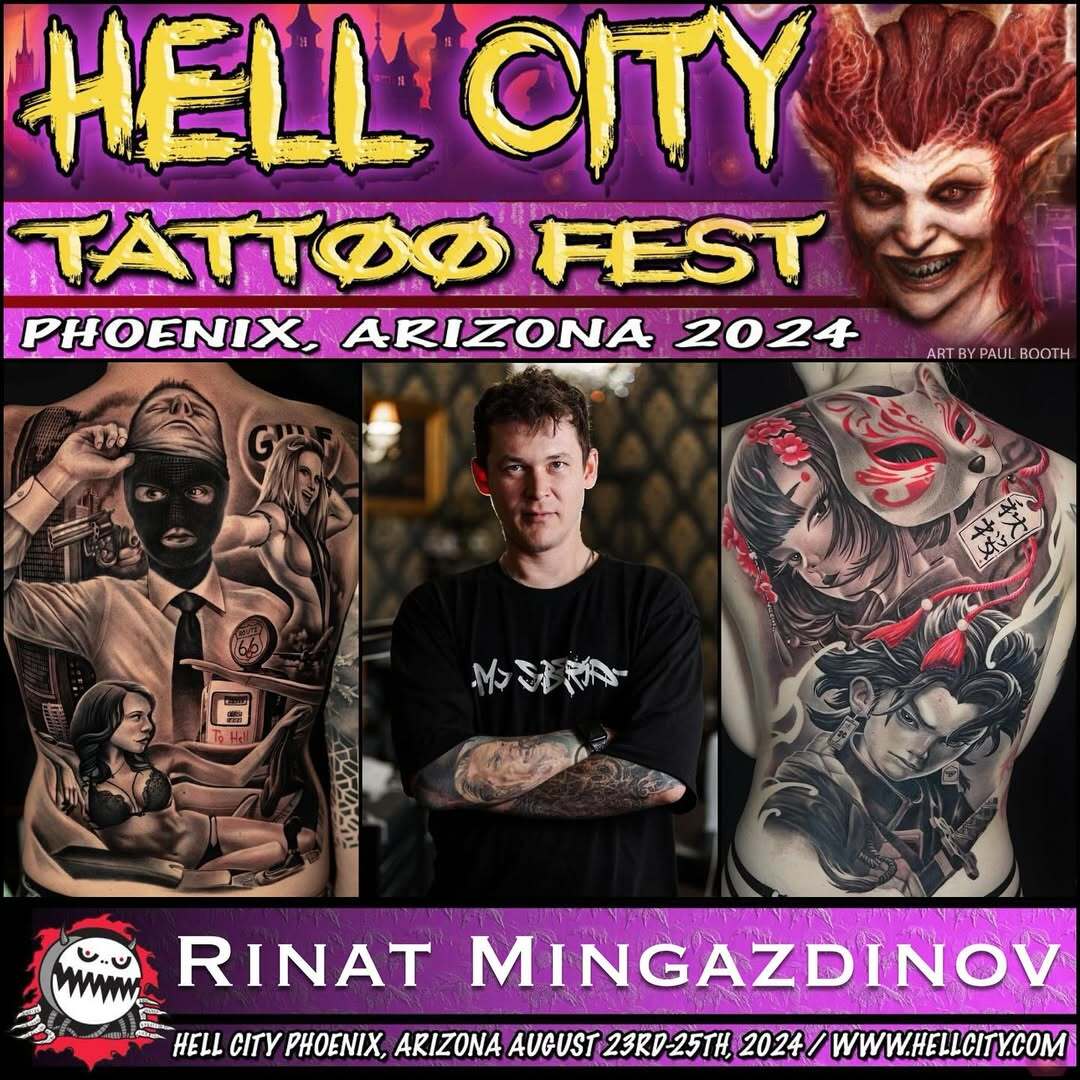
[Journalist] Conventions usually last two to three days. How can you complete a back tattoo in that time to win?
[Rinat] It depends on the speed of the artist.
Many artists collaborate, with several artists joining forces to create one large piece.
Some are so confident in their abilities that they can complete a back tattoo in three days.
You need to look at the artist's portfolio and experience, as well as their social media.
[Journalist] Have you ever done a “back in three days”?
[Rinat] I was in San Diego recently and did a black and white back for a guy in three days.
[Journalist] Did those sessions cost $1,700 as well?
[Rinat] No, there was a discount. But it's a local festival: no need to pay for hotels, flights, and so on. There are no discounts at all festivals; it depends on the conditions.
[Rinat] It depends on the speed of the artist.
Many artists collaborate, with several artists joining forces to create one large piece.
Some are so confident in their abilities that they can complete a back tattoo in three days.
You need to look at the artist's portfolio and experience, as well as their social media.
[Journalist] Have you ever done a “back in three days”?
[Rinat] I was in San Diego recently and did a black and white back for a guy in three days.
[Journalist] Did those sessions cost $1,700 as well?
[Rinat] No, there was a discount. But it's a local festival: no need to pay for hotels, flights, and so on. There are no discounts at all festivals; it depends on the conditions.
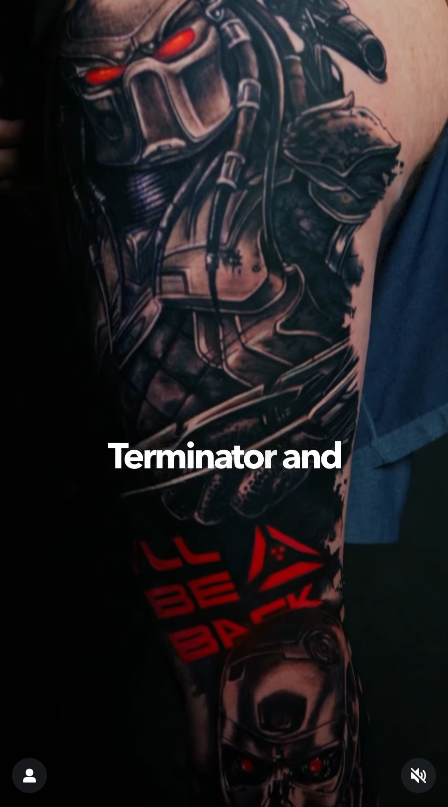
What types of work are eligible for the competition?
[Journalist] Are only works created at the tattoo convention itself eligible for awards?
[Rinat] Not exactly.
The Best of Day and Best of Show nominations are usually for work done at the convention.
At some festivals, you can submit new work in the regular categories.
There are festivals where healed and new tattoos are judged separately.
[Journalist] So, someone who got a tattoo done with you in your studio can compete for an award if they go to the convention with you?
[Rinat] Yes. If we did a big project, like a sleeve, a full leg, or a back, and the person wants to participate, we can go and submit the healed work in the appropriate category.
[Rinat] Not exactly.
The Best of Day and Best of Show nominations are usually for work done at the convention.
At some festivals, you can submit new work in the regular categories.
There are festivals where healed and new tattoos are judged separately.
[Journalist] So, someone who got a tattoo done with you in your studio can compete for an award if they go to the convention with you?
[Rinat] Yes. If we did a big project, like a sleeve, a full leg, or a back, and the person wants to participate, we can go and submit the healed work in the appropriate category.
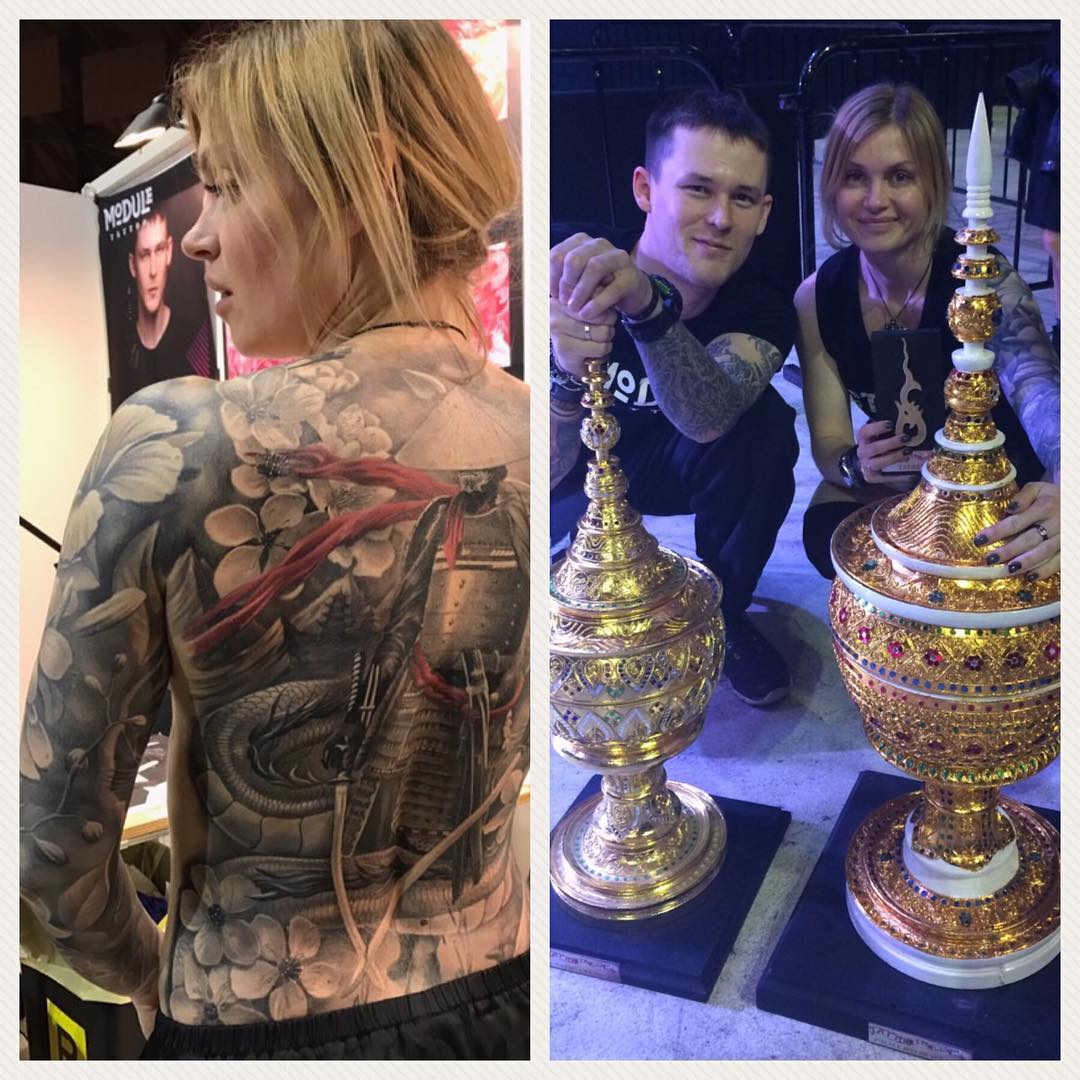
Why does the customer need this?
[Journalist] Why would a client want that? Is it status, discounts, or special energy?
[Rinat] It's a story about adrenaline and ambition. You spend the day getting the tattoo you wanted, and then they tell you that this work ranks first or even third among, say, 300–500 artists. This adds value to the work and gives you a very pleasant feeling.
In any field, it's nice to win when your tattoo stands out from hundreds of others and people say, “That's cool.” It's very energizing for both the client and the artist.
[Journalist] If there is a physical award, a statuette, who gets it, you or the client?
[Rinat] Usually, if there is only one award, it goes to the artist. But there are festivals where they make a separate small award for the client.
[Rinat] It's a story about adrenaline and ambition. You spend the day getting the tattoo you wanted, and then they tell you that this work ranks first or even third among, say, 300–500 artists. This adds value to the work and gives you a very pleasant feeling.
In any field, it's nice to win when your tattoo stands out from hundreds of others and people say, “That's cool.” It's very energizing for both the client and the artist.
[Journalist] If there is a physical award, a statuette, who gets it, you or the client?
[Rinat] Usually, if there is only one award, it goes to the artist. But there are festivals where they make a separate small award for the client.
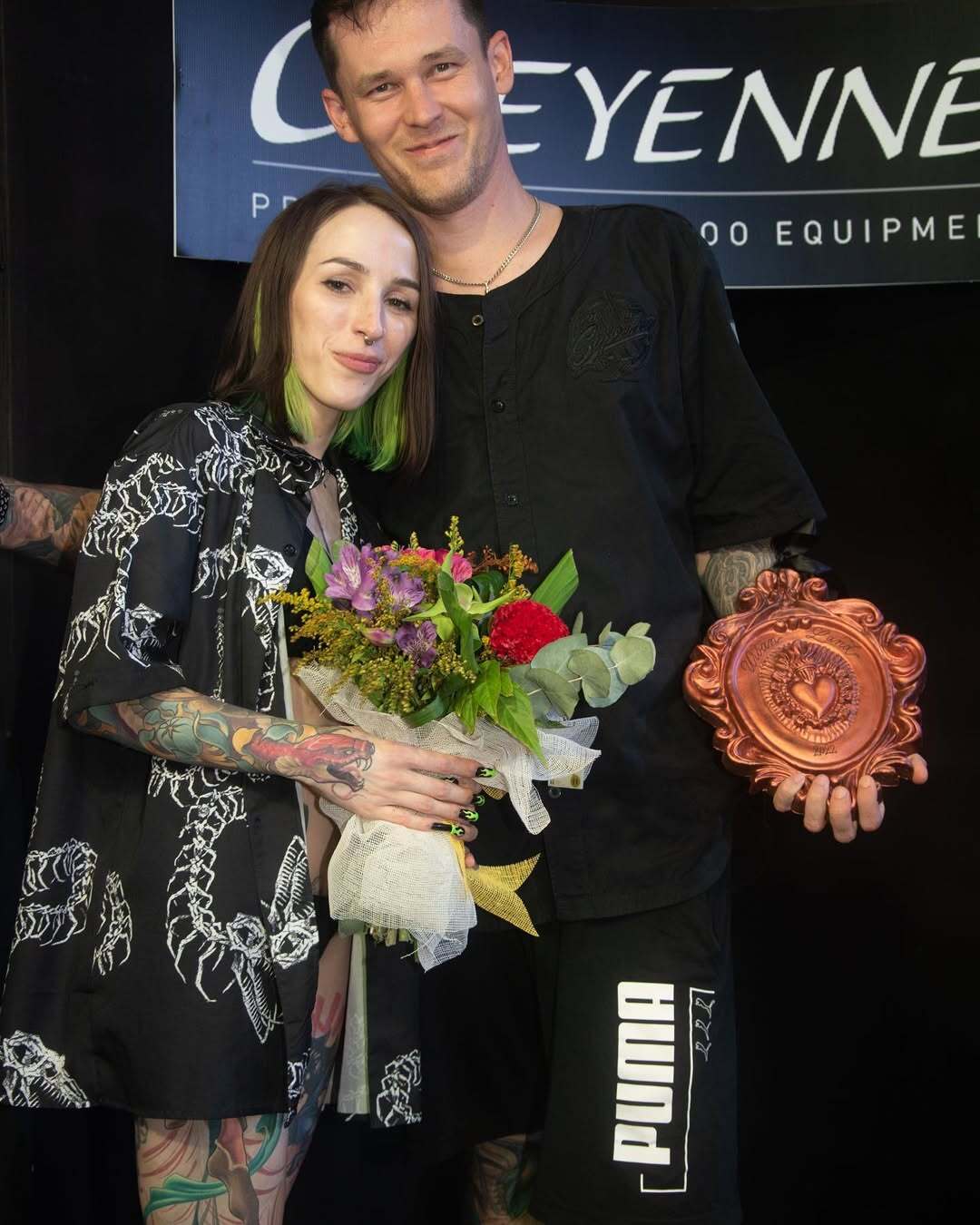
What works are selected for the show?
[Journalist] What kind of work do you usually choose for the show?
[Rinat] That's a difficult question. The client's idea is still the basis, but I create the sketch so that it looks as good as possible in the competition field.
Trust is important here. If the client trusts me and says, “Do what you think is best,” the chances are higher. If a large number of revisions begin, the work will almost certainly cease to be competitive. A master has the experience and understanding of what is competitive and what will look stronger on stage.
[Rinat] That's a difficult question. The client's idea is still the basis, but I create the sketch so that it looks as good as possible in the competition field.
Trust is important here. If the client trusts me and says, “Do what you think is best,” the chances are higher. If a large number of revisions begin, the work will almost certainly cease to be competitive. A master has the experience and understanding of what is competitive and what will look stronger on stage.
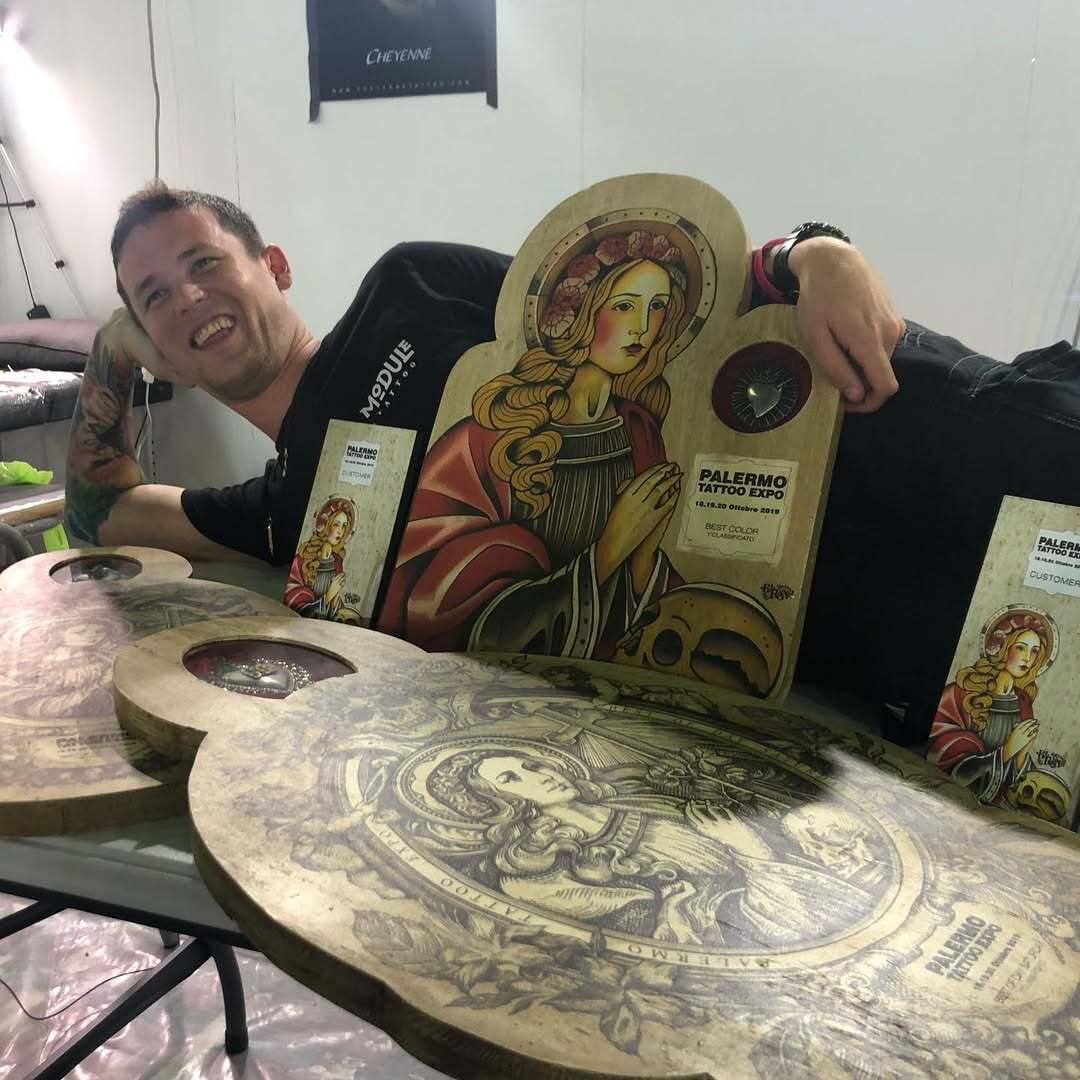
Awards that the master is proud of
[Journalist] Are there any awards that you are particularly proud of?
[Rinat] I can't single out just one. Each award represents a period of time and a stage of development. The first awards in Europe were special to me, even if the festival wasn't the biggest.
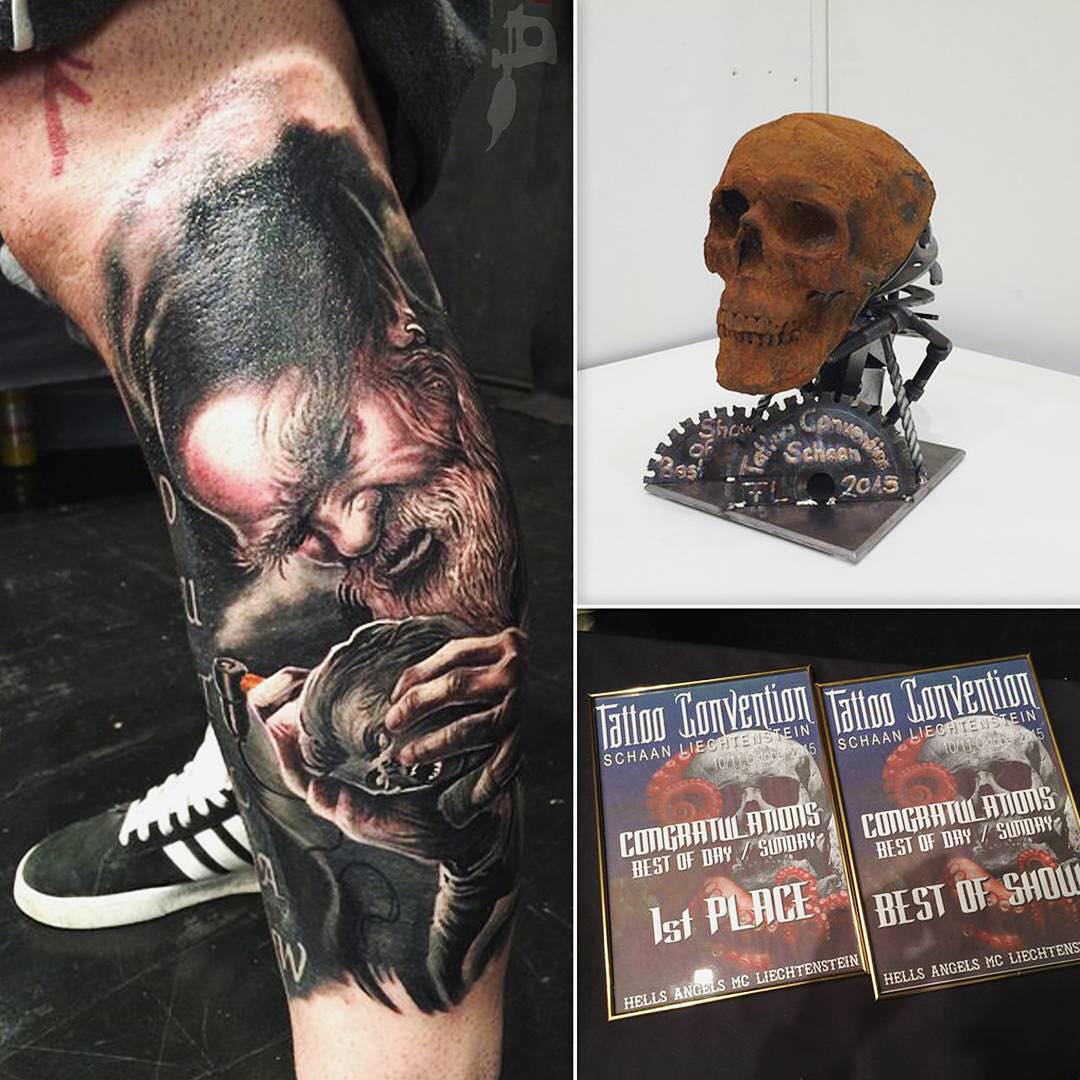
The first European festival was in Liechtenstein. I didn't even go there as a registered participant: a friend of mine had a free booth, I did a tattoo there for a random client, and that work won Best of Show. It was an unexpected participation and an unexpected victory.
Then there were major German festivals, such as the Zwickau Tattoo Convention, which has a very strict selection process for artists. It was especially honorable to win a prize there. Every award has its own story that you cling to and think, “Yes, that was cool.”
[Rinat] I can't single out just one. Each award represents a period of time and a stage of development. The first awards in Europe were special to me, even if the festival wasn't the biggest.
The first European festival was in Liechtenstein. I didn't even go there as a registered participant: a friend of mine had a free booth, I did a tattoo there for a random client, and that work won Best of Show. It was an unexpected participation and an unexpected victory.
Then there were major German festivals, such as the Zwickau Tattoo Convention, which has a very strict selection process for artists. It was especially honorable to win a prize there. Every award has its own story that you cling to and think, “Yes, that was cool.”
Experience as a jury member
and evaluation criteria
[Journalist] Have you ever awarded anyone yourself?
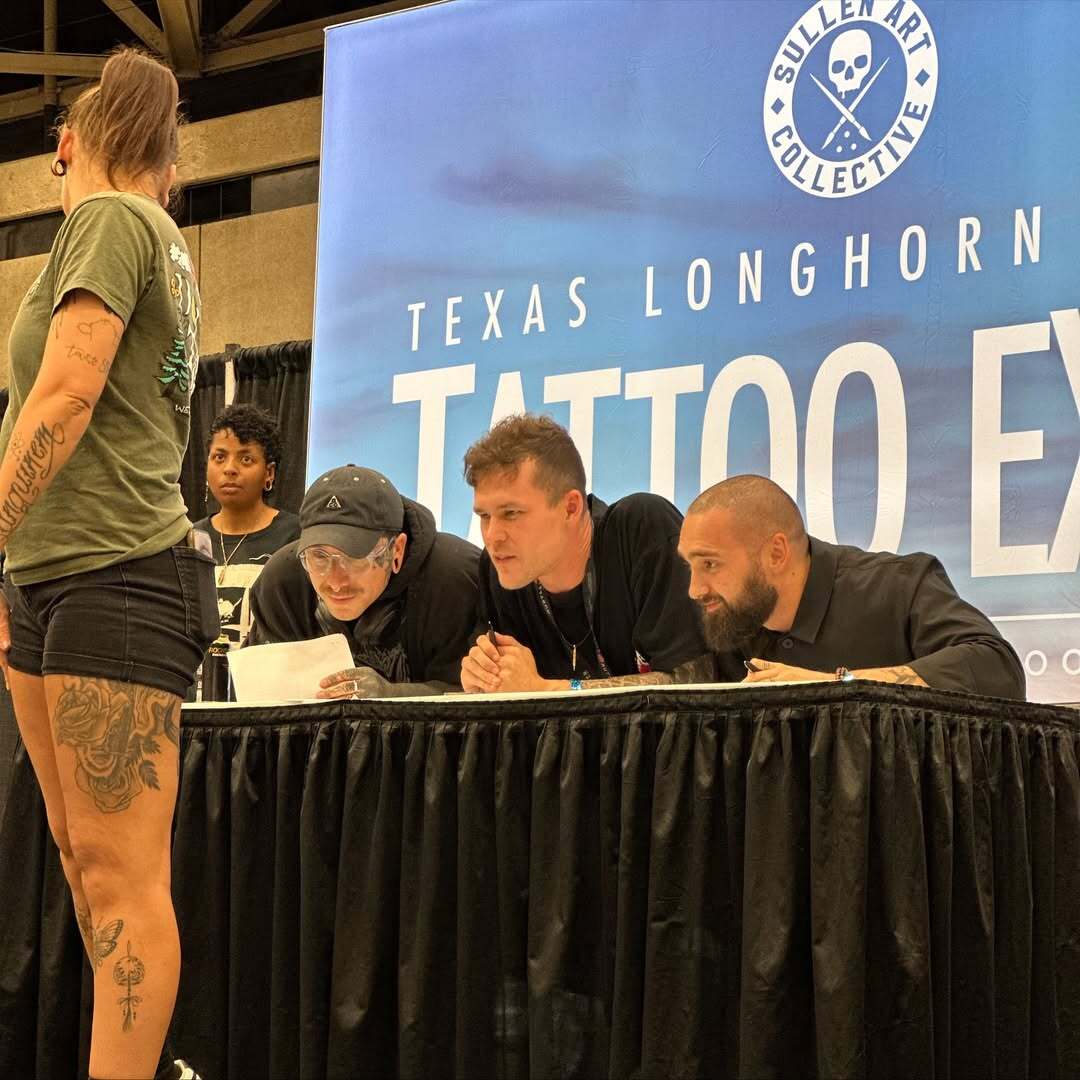
[Rinat] Yes, quite a few times. I can't say exactly how many, but I've been on the jury at least ten times.
[Journalist] As a member of the jury, what criteria do you use to evaluate other people's work?
[Rinat] It's always a combination of factors:
- the placement of the tattoo in relation to anatomy, dynamics;
- composition and layout;
- the quality of the outline;
- the density of the coloring;
- how it has healed: are there any traces of “sores,” holes, or gaps?
First, works with obvious flaws are eliminated. Then, when you're left with the top 5-10, you start looking more closely, comparing where there are more positives. Sometimes it's immediately clear: you see the work and you know, “this is definitely the winner.”
[Journalist] Do you have to defend your opinion in front of the other jury members? How does the voting work?
[Rinat] Usually there are three judges. There are two formats:
1) Scorecards, which are not very clear and can lead to errors in counting.
2) Tokens, which are a more honest and transparent system.
In the second case, each judge has three tokens. The models come on stage, the jury walks around, looks, and gives tokens to the works they like. This is visible to the audience; no one counts the points “in the shadows.” As a result, you have nine works that have received votes, and among them, 1-3 places are collectively distributed, sometimes with an additional round of tokens and discussion.
[Rinat] Yes, quite a few times. I can't say exactly how many, but I've been on the jury at least ten times.
[Journalist] As a member of the jury, what criteria do you use to evaluate other people's work?
[Rinat] It's always a combination of factors:
- the placement of the tattoo in relation to anatomy, dynamics;
- composition and layout;
- the quality of the outline;
- the density of the coloring;
- how it has healed: are there any traces of “sores,” holes, or gaps?
First, works with obvious flaws are eliminated. Then, when you're left with the top 5-10, you start looking more closely, comparing where there are more positives. Sometimes it's immediately clear: you see the work and you know, “this is definitely the winner.”
[Journalist] Do you have to defend your opinion in front of the other jury members? How does the voting work?
[Rinat] Usually there are three judges. There are two formats:
1) Scorecards, which are not very clear and can lead to errors in counting.
2) Tokens, which are a more honest and transparent system.
In the second case, each judge has three tokens. The models come on stage, the jury walks around, looks, and gives tokens to the works they like. This is visible to the audience; no one counts the points “in the shadows.” As a result, you have nine works that have received votes, and among them, 1-3 places are collectively distributed, sometimes with an additional round of tokens and discussion.
Plans for tattoo conventions 2026
[Journalist] Which tattoo conventions are you planning to attend in the near future? What are your plans for 2026?
[Rinat] That question is currently being worked on. Hustle Butter and Cheyenne, the brands I represent, are supposed to send me a list of conventions they will be attending.
They send out a list, I look at the calendar, the cities and dates, submit my applications, and make my schedule. It's hard to make predictions right now, as everything is subject to change. But, for example, I definitely want to participate in the convention in Pasadena, if it's on the list.
[Journalist] Is Pasadena a city near Los Angeles?
[Rinat] Yes, an hour's drive from here. It's a “home” convention: you can drive there in the morning and go home in the evening. At the same time, it's quite large, with about 800 artists. But nothing has been confirmed yet.
[Rinat] That question is currently being worked on. Hustle Butter and Cheyenne, the brands I represent, are supposed to send me a list of conventions they will be attending.
They send out a list, I look at the calendar, the cities and dates, submit my applications, and make my schedule. It's hard to make predictions right now, as everything is subject to change. But, for example, I definitely want to participate in the convention in Pasadena, if it's on the list.
[Journalist] Is Pasadena a city near Los Angeles?
[Rinat] Yes, an hour's drive from here. It's a “home” convention: you can drive there in the morning and go home in the evening. At the same time, it's quite large, with about 800 artists. But nothing has been confirmed yet.
How to become a “competitive” customer
[Journalist] If someone wants their tattoo done by you to win a prize, what should they do? How should they contact you?
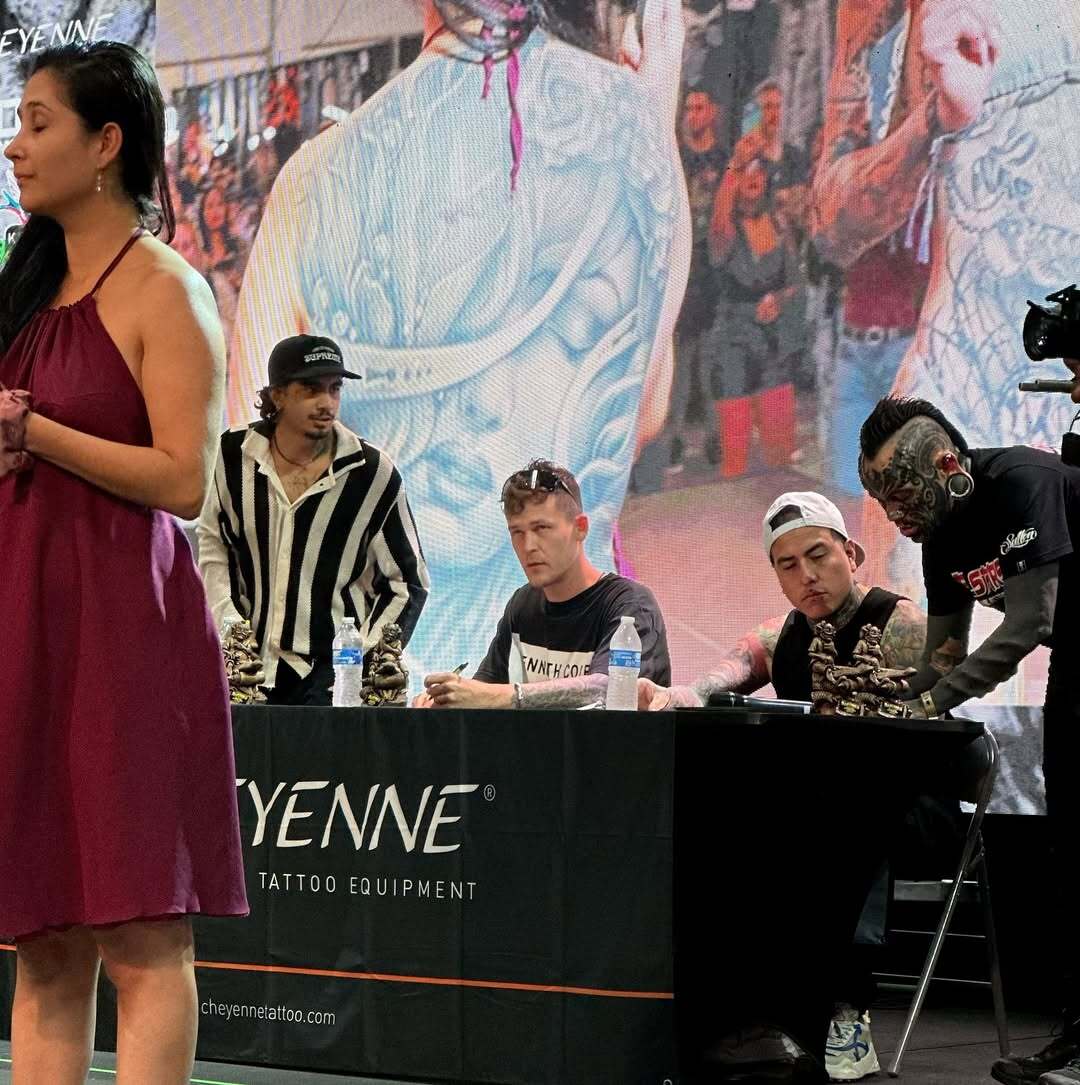
[Rinat] The main thing is to trust.
First, voice your idea. Then trust what I suggest.
I always suggest the best option from what I see in my head, especially when it comes to conventions. No one deliberately draws “so-so” options. The strongest works come from those who trust completely.
[Journalist] Do you suggest a specific convention and city yourself?
[Rinat] I usually make announcements on social media: on the website, on Instagram, and so on. If someone sees that I'll be at a convention and wants to work with me there, they just need to write: who they are, where they're from, what they want. Something like: “Hey, I'm from such-and-such city, I want this kind of project, let's do it at this convention.” It's pretty simple.
[Rinat] The main thing is to trust.
First, voice your idea. Then trust what I suggest.
I always suggest the best option from what I see in my head, especially when it comes to conventions. No one deliberately draws “so-so” options. The strongest works come from those who trust completely.
[Journalist] Do you suggest a specific convention and city yourself?
[Rinat] I usually make announcements on social media: on the website, on Instagram, and so on. If someone sees that I'll be at a convention and wants to work with me there, they just need to write: who they are, where they're from, what they want. Something like: “Hey, I'm from such-and-such city, I want this kind of project, let's do it at this convention.” It's pretty simple.
Money and conditions at conventions
[Journalist] Are the financial terms for tattooing at conventions different from those at a studio?
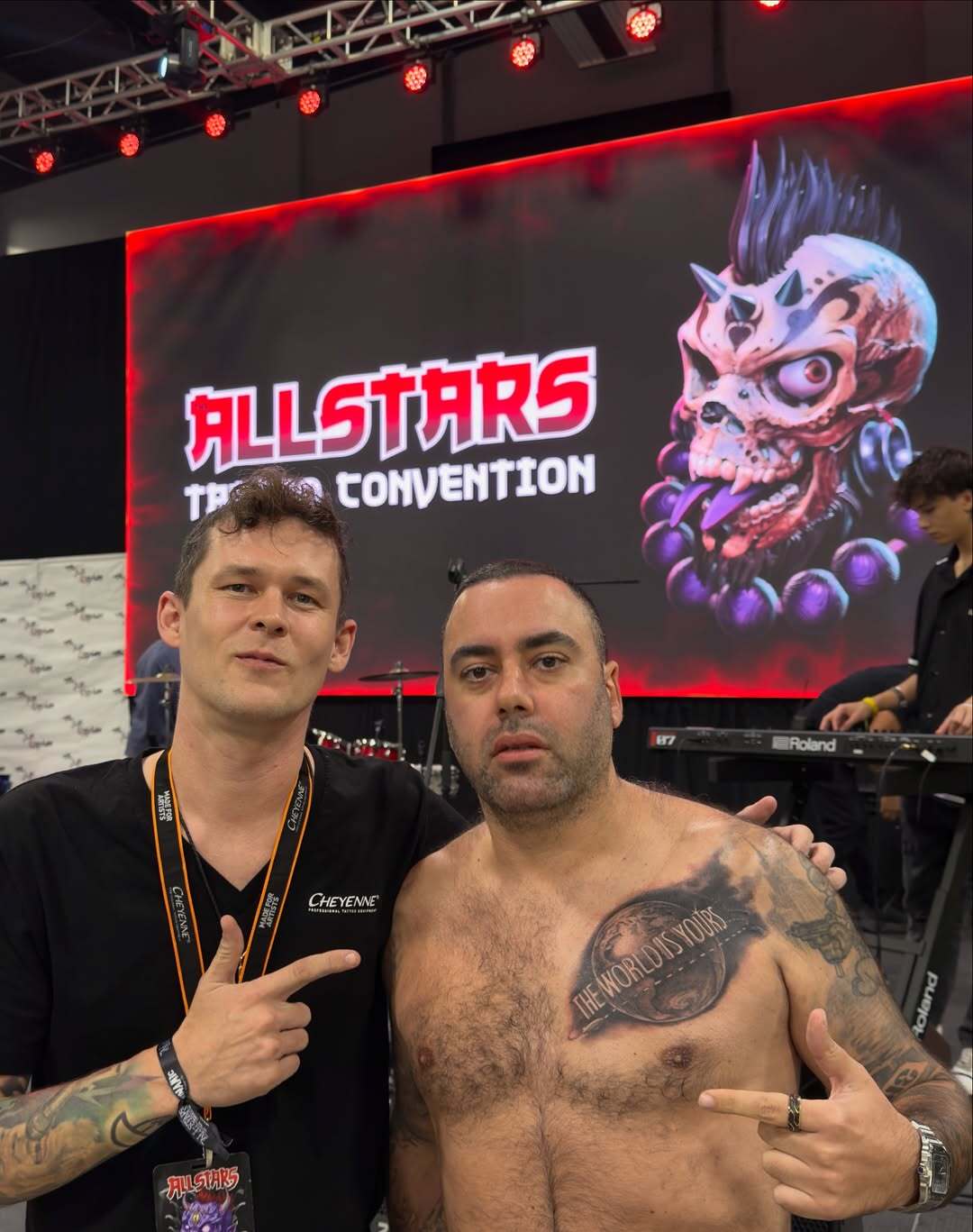
[Rinat] It depends on several factors:
If it's a local convention where I don't have to pay for flights and hotels, and I don't have to give a percentage to the studio, there may be discounts.
And if the person doesn't conflict with the concept and trusts my vision.
If the client insists on their own ideas and breaks the original plan, the price will be the same as in the studio. The goal of participating in a convention is to try to win an award. When numerous revisions begin, the work often ceases to be award-winning. Although there are cases when adjustments are appropriate.
[Journalist] If someone travels with you to another city for a convention, who pays for travel and accommodation?
[Rinat] Everyone pays for themselves. The client pays for their flights and hotels, and I pay for mine. This is not about commercial gain, but about shared experience and moral satisfaction.
[Rinat] It depends on several factors:
If it's a local convention where I don't have to pay for flights and hotels, and I don't have to give a percentage to the studio, there may be discounts.
And if the person doesn't conflict with the concept and trusts my vision.
If the client insists on their own ideas and breaks the original plan, the price will be the same as in the studio. The goal of participating in a convention is to try to win an award. When numerous revisions begin, the work often ceases to be award-winning. Although there are cases when adjustments are appropriate.
[Journalist] If someone travels with you to another city for a convention, who pays for travel and accommodation?
[Rinat] Everyone pays for themselves. The client pays for their flights and hotels, and I pay for mine. This is not about commercial gain, but about shared experience and moral satisfaction.
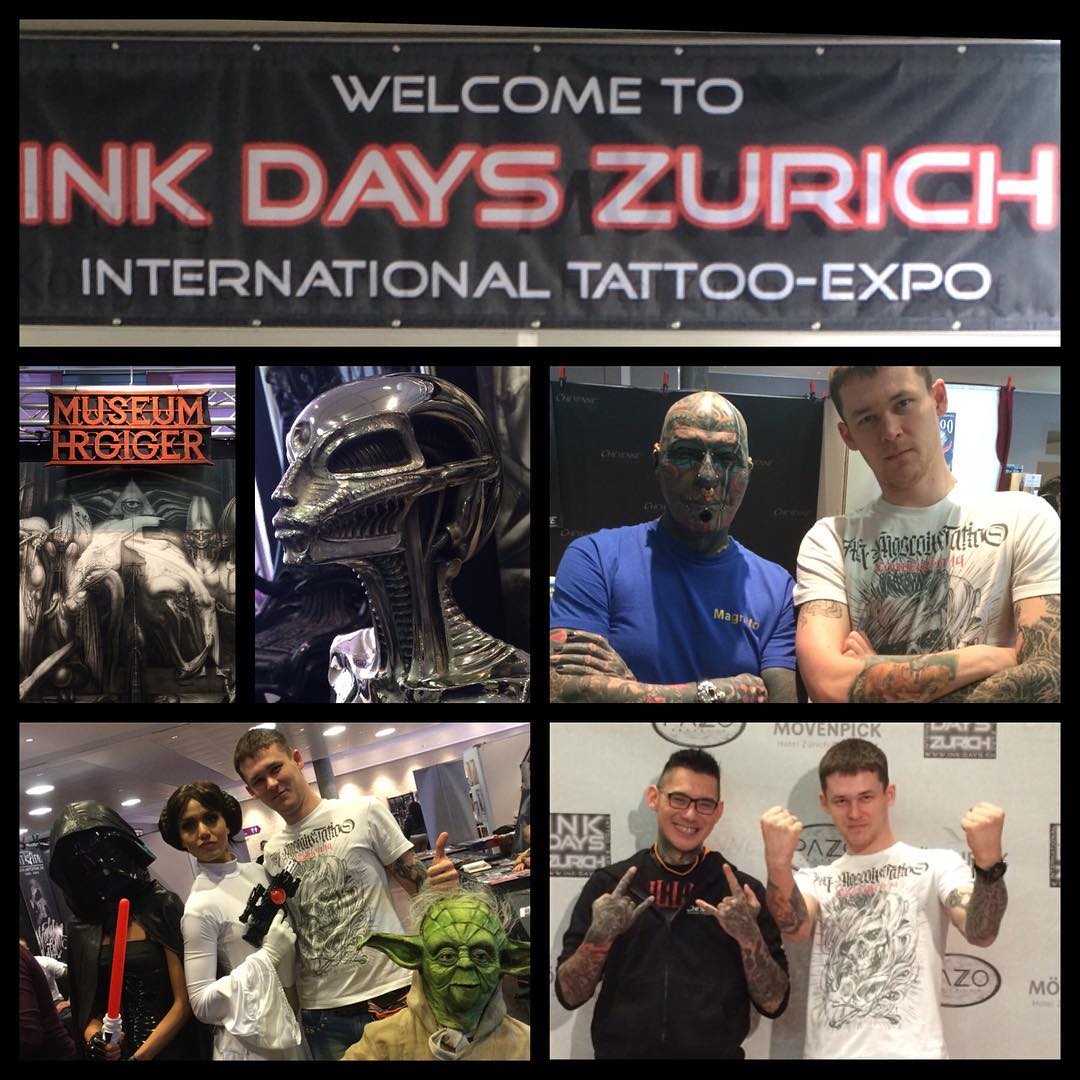
The convention as Tattoo Disneyland:
an experience for the customer
[Journalist] So it's more like entertainment than a commercial project?
[Rinat] I would compare it to a trip to Disneyland. It's not a given that you'll immediately understand whether it's “your thing” or not, but you're likely to have a powerful experience.
You get tattooed at high speed, and at the end of the day, you may receive an award and leave with a sense of victory. Or you may not receive an award, but you still leave with a feeling of having had a great time, socializing, and receiving support. The spirit of the convention is a special competitive atmosphere.
[Journalist] So it's not only networking for artists, but also for clients.
[Rinat] Yes. Clients lying on neighboring chairs also start talking, sharing their experiences: how they felt about getting their knee, ribs, first tattoo, and so on. It's like a little party.
[Rinat] I would compare it to a trip to Disneyland. It's not a given that you'll immediately understand whether it's “your thing” or not, but you're likely to have a powerful experience.
You get tattooed at high speed, and at the end of the day, you may receive an award and leave with a sense of victory. Or you may not receive an award, but you still leave with a feeling of having had a great time, socializing, and receiving support. The spirit of the convention is a special competitive atmosphere.
[Journalist] So it's not only networking for artists, but also for clients.
[Rinat] Yes. Clients lying on neighboring chairs also start talking, sharing their experiences: how they felt about getting their knee, ribs, first tattoo, and so on. It's like a little party.

What clients should prepare for at the convention
[Journalist] Finally, what else should a client who is going to a convention with you be prepared for? Noise, crowds, tight deadlines, what else?
[Rinat] If we're talking about the US, then:
- Be sure to bring a blanket conventions are often very cold, with the air conditioning turned up to the max.
- Prepare snacks, constantly chew something to distract your brain and not be hungry.
- Remember about the noise: loud music is playing, circus performers may be on stage, someone is swallowing swords, all this in the background.
Noise-canceling headphones save the day.
[Journalist] Is it worth “suffering” for the sake of winning?
[Rinat] Motivation is more important here. It's really a lot of work on the part of the client. Everything is softer and calmer in the studio. At a convention, when you have a tough job that needs to be done in an hour, you can't constantly check in with people to make sure they're comfortable: there's a task, and it needs to be done. That's why it's worth going there for those who understand where they're going and are ready for this format. If a person is only looking for maximum comfort, a convention is not for them.
[Rinat] If we're talking about the US, then:
- Be sure to bring a blanket conventions are often very cold, with the air conditioning turned up to the max.
- Prepare snacks, constantly chew something to distract your brain and not be hungry.
- Remember about the noise: loud music is playing, circus performers may be on stage, someone is swallowing swords, all this in the background.
Noise-canceling headphones save the day.
[Journalist] Is it worth “suffering” for the sake of winning?
[Rinat] Motivation is more important here. It's really a lot of work on the part of the client. Everything is softer and calmer in the studio. At a convention, when you have a tough job that needs to be done in an hour, you can't constantly check in with people to make sure they're comfortable: there's a task, and it needs to be done. That's why it's worth going there for those who understand where they're going and are ready for this format. If a person is only looking for maximum comfort, a convention is not for them.
In the next part, we’ll take a closer look at tattoo corrections, also known as cover-ups.