

There's a conversation I have with almost every new client, and it usually starts with someone unrolling a phone full of saved images and saying, "I love it — I just don't know where to put it." Sometimes she works in a courtroom and needs to hide it entirely. Sometimes she's a bartender in West Hollywood and wants it to be the first thing anyone sees. Sometimes she doesn't quite know yet, and that's actually the best place to start from.
Placement is the second half of the design. You can commission the most beautifully drawn piece in Los Angeles, and if it lives on the wrong part of the body, it will fight you every day — sticking out when you want privacy, hiding when you want it seen, distorting when you move. Getting tattoo placement for women right is a decision I want clients to make with real information, not a Pinterest guess. This guide walks through it the way I walk through it in consultation — every major zone, what it does well, what it doesn't, and how visible or discreet each one actually is in real life.
Why Placement Matters More Than Most People Think
A tattoo doesn't sit on a flat piece of paper. It sits on curves, joints, and skin that stretches, folds, and shifts as you move through your day. The same design placed two inches higher or lower can read completely differently — sharper or softer, formal or intimate, career-safe or unmistakably visible.
There's also the long game. Skin on the hip stretches during pregnancy. Skin on the forearm sees sun every day if you drive with your left arm out the window. Skin on the ribs is thin, hurts more, and heals slower. When I think about female tattoo placement, I'm not just answering "where does this look pretty" — I'm answering "where will this still look pretty in fifteen years, given who you are and how you live."
The other quiet factor is emotional. A tattoo behind the ear feels like a secret you carry with you. A tattoo on the forearm feels like a declaration. Neither is better. But they're not the same experience, and I want clients to understand what they're actually signing up for.
Highly Visible Placements — When You Want the Tattoo to Be Seen
Let's start with the tattoo placements for women that live on display. These are the zones that read immediately in most everyday outfits.
Forearm
Probably the most requested visible spot. Wide, flat canvas. Good visibility to the wearer — you see it constantly, which many people find comforting. It ages reasonably well because forearm skin is relatively stable and not prone to major weight fluctuation. Pain level is moderate, with the inner forearm being slightly more sensitive than the outer.
Downside: full sun exposure most of the year, especially in LA. Sunscreen becomes a lifetime commitment.
Upper Arm and Shoulder
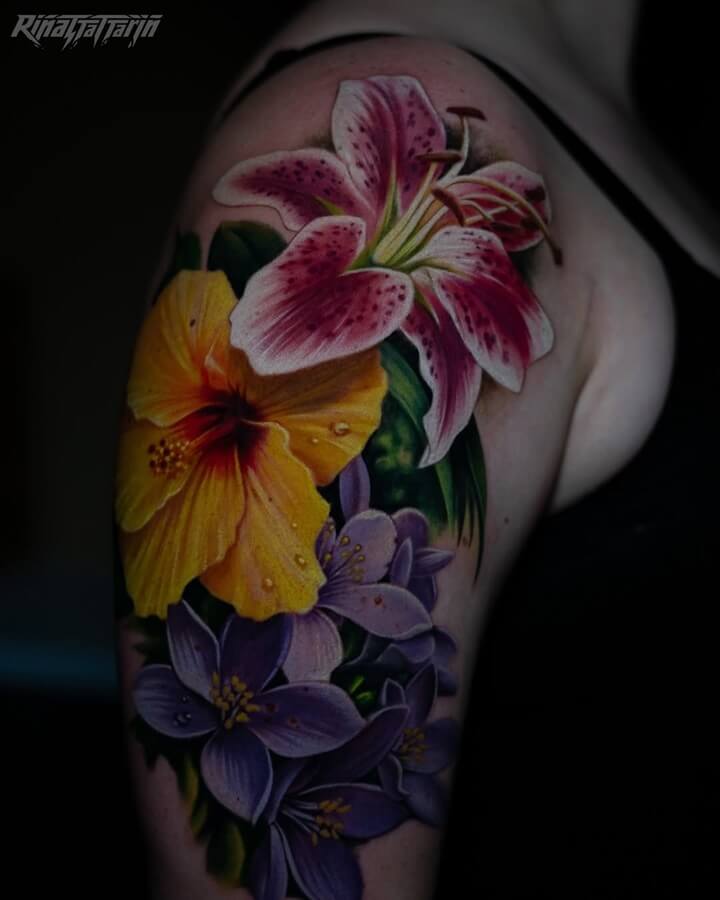
The upper arm is a workhorse for feminine tattoo placement. It's visible in tank tops and sleeveless dresses but hides completely under any short sleeve. Skin here is thick, well-vascularized, and holds pigment beautifully over decades. Pain level is on the lower end.
The deltoid rounds nicely for medium-sized pieces — a good compromise for someone who wants presence without a sleeve-level commitment.
Calf
Skin on the calf is dense and pigment sits well. Visibility is seasonal — invisible in jeans, front and center in shorts. Aging is generally graceful because there's not much stretching. Pain level is moderate.
One thing to think about: calf tattoos on the outer side get more sun than the inner side. Placement within the zone matters.
Collarbone and Chest
The collarbone is one of the most photographed placements right now for good reason — it frames the neckline and reads elegantly under most tops. Pain is significant because the skin is thin and pressed against bone. Ink sits well here as long as the artist places it correctly, since the skin is stable and low-friction.
Chest placements sit slightly lower, over the sternum or across the upper ribs. These are strong statement pieces but should be planned carefully for anyone considering pregnancy or significant chest changes.
Hidden Placements — Career-Friendly and Easy to Cover
Some of the most beautiful tattoo locations for women live where nobody sees them unless the wearer chooses to reveal them. These are the placements I recommend to clients with strict dress codes, uniforms, professional obligations, or simply a preference for keeping certain things private.
Ribcage and Side
The ribs are one of the classic hidden zones. Fully covered by any bra and any shirt. Visible only in swimwear or intimate settings.
Realistic considerations: ribs hurt. A lot. Skin is thin over bone, and the whole area moves every time you breathe. Healing takes longer than most zones because you can't stop the motion. That said, when a rib piece is done well, it flows with the body in a way few placements can match.
Sternum and Underboob
The sternum and underboob areas have become some of the most requested private placements for women in the last decade. Both hide completely under any bra and any top with a normal neckline. Pain is high — thin skin, prominent bone, sensitive nerves — but the payoff is a piece that feels genuinely personal.
Aging note: the underboob area can shift with age, weight change, or pregnancy. Traditional bold work handles this better than fine linework.
Inner Bicep and Inner Arm
The inner bicep is fully hidden by any short-sleeve top with arms at the sides. Skin here is thinner and more sensitive than the outer arm, so pain is slightly higher, but it holds pigment well. It's a favorite of clients who want a piece they can see when they look down but nobody else can see across a room.
Behind the Ear and Nape of Neck
Two of the smallest, most discreet spots on the body. Behind the ear is fully hidden by hair for anyone with medium-length hair or longer. The nape is hidden by anything above the shoulders. These placements suit small, meaningful pieces — a symbol, a date, a single word.
One realistic note: skin here is thin and heals fast, but it also ages a bit differently than large body zones. Fine detail can soften more visibly. Bold, simple designs hold up best.
Foot and Ankle
Fully hidden by any closed shoe. Visible in sandals, at the beach, and around the pool. This is a classic hidden-visible hybrid — completely invisible five days a week for most office workers, and openly displayed on weekends. Pain is on the higher end because there's not much cushioning between skin and bone. Ankle bones especially.
Foot tattoos have a reputation for fading faster than other placements, and there's some truth to it — friction from socks and shoes takes a toll. Bold designs and larger scales hold up better than tiny fine-line work in this zone.
Hip and Upper Thigh
Fully hidden by any pants, skirt, or one-piece swimsuit. The hip is a large, workable canvas with skin that holds pigment well. Pain is moderate to high depending on how close you get to the hip bone itself.
The one factor to plan for: hip skin stretches during weight change and pregnancy. If either is on the horizon within a few years, either postpone the hip piece or choose a design that can accommodate a small amount of stretching without losing its shape.
Situational Placements — Neither Fully Hidden Nor Fully Visible
Some of the best tattoo placement ideas for women live in a middle zone — visible in some outfits, hidden in others. These offer the most flexibility.
Wrist
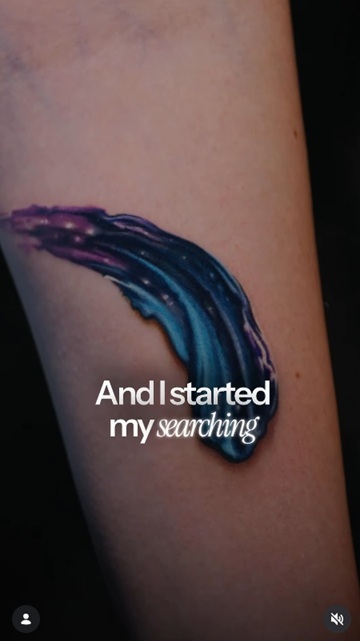
The wrist is arguably the most photographed placement in the last decade. Visible when you extend your arm, easily covered by a watch, a bracelet, or a long sleeve. Pain is moderate — the inner wrist is more sensitive than the outer.
Wrist tattoos work best small. Fine linework, initials, small symbols, or delicate botanicals fit the anatomy without feeling forced.
Back of the Neck
Hidden by any collar or by hair worn down. Visible with hair up or with an open neckline. This is a beautiful placement for small vertical designs — a spine of dots, a small phrase, a single flower.
Thigh Front and Back
Depending on how you dress, thigh tattoos can be permanently hidden or seasonally visible. Long dresses and pants cover them completely; shorts, swimsuits, and shorter skirts reveal them.
The thigh is one of the best canvases on the body for feminine tattoo placement — large, curved, and slow to change. It handles both bold color work and delicate linework beautifully, and it's one of the least painful areas of the body to tattoo because the skin is thick and well-cushioned.
A Quick Comparison of Common Zones
Here's a snapshot of the trade-offs across the most requested placements for women. Pain and visibility are on a rough 1–5 scale, where 1 is minimal and 5 is high.
Reading this table, one pattern jumps out: the most private placements tend to hurt more, and the most visible placements tend to hurt less. There's a rough logic — the zones farthest from bone are easier to sit through, and those zones are usually also the most casually visible.
Choosing Between Minimalist and Statement Designs
Placement and design scale are two knobs on the same instrument. Minimalist tattoos — think small linework, single symbols, tiny florals, delicate script — sit best on smaller, curvier zones: wrist, behind the ear, nape, ankle, sternum, side of finger. They quietly complement the anatomy without competing with it.
Larger statement work belongs on the canvases that can hold scale: upper arm, thigh, calf, ribs (for the brave), back. Trying to fit a large design into a small area is a common mistake — the details compress, the composition suffers, and the whole thing ages faster because there's no breathing room between the linework and the negative space.
I have this conversation constantly, especially with clients drawn to delicate tattoo ideas. A fine-line piece on a wrist looks stunning at day one and holds well if it's simple. The same complexity of design tried at the same tiny scale will blur into indistinction within five to eight years. Placement and scale need to match the design's level of detail. When they do, the piece has a chance to age into something even better than it started.
Some quick pairings I recommend based on what clients ask me most:
- A single meaningful word or date: collarbone, wrist, ribs vertical, spine
- Small floral or botanical piece: behind ear, back of neck, forearm inner, ankle
- Symbol or icon under an inch: wrist, finger side, behind ear
- Portrait or realism (medium): upper arm, thigh, calf
- Large decorative piece: thigh, ribs, back, upper arm to shoulder
- Fine-line abstract: collarbone, sternum, spine
Practical Considerations You Won't Find on Pinterest
A few real-world factors that don't show up in aesthetic mood boards but matter enormously:
Your wardrobe. Look at what you actually wear five days a week, not what you wore for the wedding you were in last summer. Placement should work with your real closet.
Your job. Some industries genuinely don't care — creative, tech, hospitality, wellness. Others still do — law, medicine, corporate finance, education in more traditional districts. Know your world before committing to a visible placement.
Sun exposure patterns. LA sun is relentless. A forearm tattoo on a driver's left arm sees vastly more UV than the same tattoo on the right. Runners, cyclists, and anyone who spends significant time outdoors should factor placement into their aging math.
Pregnancy plans. If a pregnancy is likely within the next few years, hold off on hip, low belly, and lower back placements, or plan the piece knowing the canvas will stretch.
Bra straps, waistbands, watches. Chronic friction from clothing accelerates fading on a very specific line. If you never take your watch off, a wrist piece under the strap will wear differently than one just above it.
Photographability. Some clients want a piece that photographs well — visible, well-lit, easy to angle a camera at. Others explicitly want a piece that lives just for them. Both are valid; they lead to very different placements.
Wrapping It Up
Every placement is a trade-off. Visibility versus discretion. Pain versus ease. Scale versus subtlety. There's no single correct answer, but there's usually one right answer for a specific person at a specific point in her life — and finding it is one of the more interesting parts of a good consultation.
If you're in the Los Angeles area and thinking through tattoo placement for women — whether it's a first small piece behind the ear or a larger commitment across the thigh — bring your reference images, your wardrobe realities, and your questions to a consultation. I'll walk through the anatomy of the piece with you, sketch how it will actually sit on your body, and help you decide whether the placement you have in mind is the one you'll be glad you chose ten years from now.
FAQ
What is the best tattoo placement for women who want something they can hide at work: The ribs, sternum, underboob, hip, upper thigh, inner bicep, and behind the ear are all fully hidden by standard professional clothing. Behind the ear and inner bicep are the least painful of that group; sternum and ribs are the most painful but offer the most workable canvas for larger private pieces.
Which tattoo placements hurt the most for women: Ribs, sternum, foot, ankle, and areas directly over bone tend to be the most painful. Skin over thick muscle — thigh, upper arm, calf, upper back — is generally the most comfortable to sit through.
Do small feminine tattoos on the wrist or behind the ear age well: Bold, simple designs on the wrist and behind the ear can hold up for a decade or more with proper sun protection. Highly detailed micro-realism or ultra-fine linework in those spots tends to soften faster because there's no room for the ink to breathe as skin ages.
Which placements should I avoid if I'm planning pregnancy: Lower belly, hips, and lower back skin stretches significantly during pregnancy. If children are in your near-term plans, either postpone tattoos in those zones or choose designs that can absorb slight distortion without losing their shape.
Are foot tattoos really that hard to keep looking sharp: Foot tattoos face constant friction from socks and shoes, which accelerates fading compared to lower-friction zones. Bold designs with strong linework and larger scales hold up considerably better than tiny fine-line work on the feet. Sun protection when wearing sandals also matters.